Our curriculum in grades K-2 builds the foundation for a traditional Catholic elementary education. Instruction in grammar, phonics, mathematics, and religion provides a focus for our young learners in building key skills that will be applied throughout their education. Curriculum is focused on students learning to read through our structured phonics program, which is scaffolded from Kindergarten to 1st grade to 2nd grade. Instilling a love of the teachings of Jesus Christ, as well as living the Gospel Values, is the cornerstone of our religious instruction, that is woven throughout our curriculum. Kindergarten and First Grade begin the preparation for Second Grade and the receiving of the Sacraments of Reconciliation and First Eucharist. Our religion curriculum is further enriched by students attending mass every Friday, during the school year.
iReady provides the platform for diagnostic assessment at the beginning, middle, and end of the school year. The data is used to create the individualized learning path for each student, as well as information that teachers use to create skill-based groupings and provide individualized instruction. In addition, St. Rose uses the Developmental Reading Assessment (DRA), as a benchmark assessment three times throughout the school year. This tool measures a student’s reading accuracy and his/her reading comprehension level and shows a child’s reading growth over time. It provides information about the student’s reading level and, most important, what it is our students need to do to improve reading skills and behaviors.
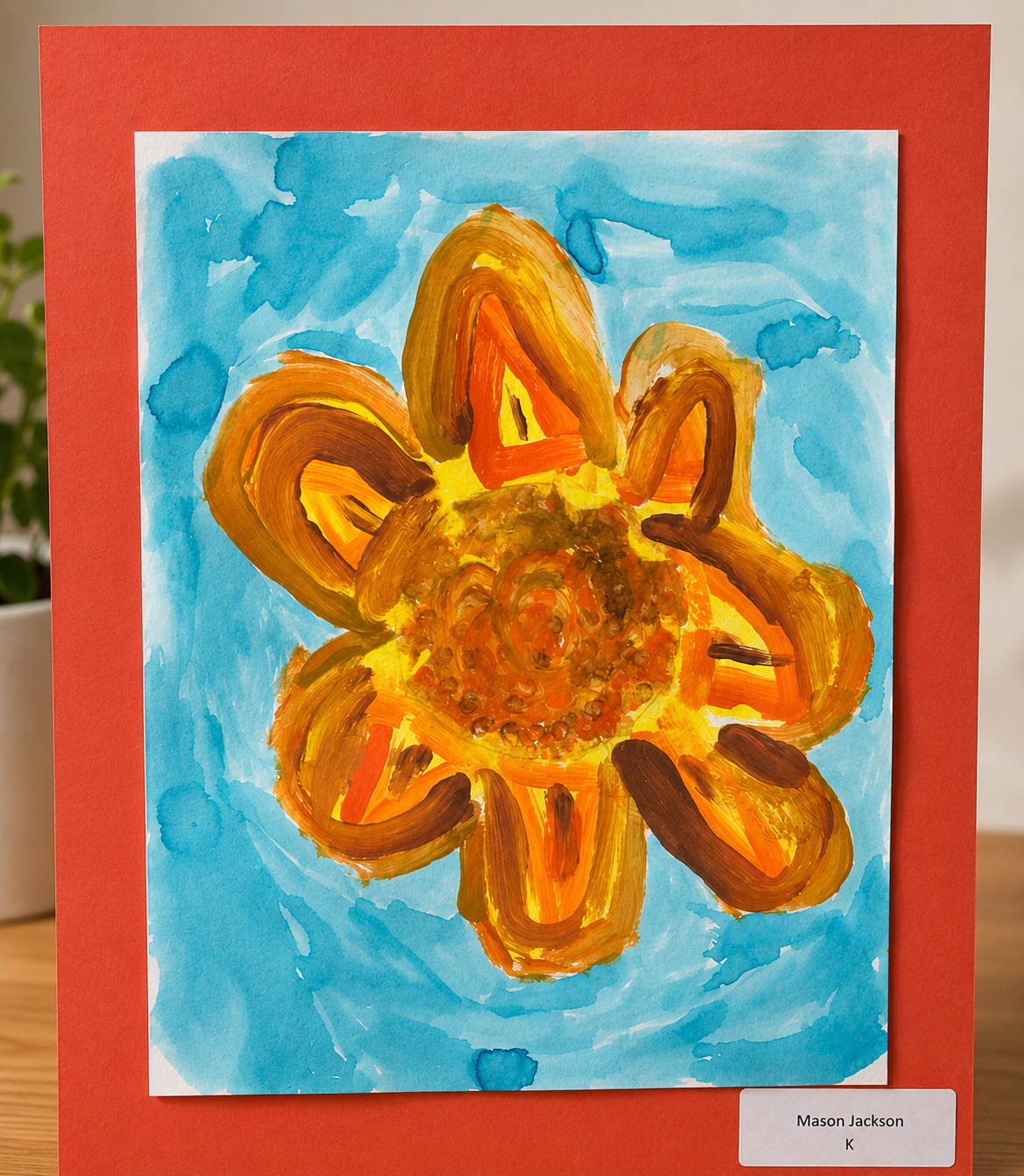
Our curriculum in grades 3-5 builds upon the foundation started in grades K-2; grade 3 sees the shift from learning to read to reading to learn. Novels are added to the anthologies used in the intermediate grades for reading instruction; and independent reading at and above grade level is encouraged through classroom libraries. Core subjects of English language arts, mathematics, social studies, science, and religion are enriched by the creative arts and innovation lab. Students are instructed in music, art, physical education, Spanish, as well as STEM and other hands-on and computer-based activities in the innovation lab. Fourth and Fifth graders participate in Geography Bees, Spelling Bees, and Invention Convention at the school, regional, and state levels. Grades 3–5 join the school community in celebrating mass every Friday; and lead the liturgy through lecturing, altar serving, offertory, and choir.
Grades 3–5 begin a transition from the self-contained classroom environment to a limited departmentalized structure, which helps bridge their primary years to their middle school years. Teachers use block scheduling for ELA and Math to facilitate the personalized learning model, which includes online work, using iReady and the Google Suite of tools on Chromebooks.
Our curriculum in grades 6-8 prepares our Middle School students with the skills and tools they will need to succeed in high school and beyond. The Middle School uses a departmentalized model, students have a homeroom and then change classes throughout the day to receive instruction from subject area teachers. Courses are double blocked on specific days of the week to allow for more in-depth understanding and mastery through instruction, application, and personalized learning rotations.
English Language Arts includes literature, vocabulary, writing, grammar, and spelling. Novels are used for literature studies, and form the basis for Passion Projects, Field Trips, and other enrichment opportunities and cross-curricular activities.
Religion meets daily, for one period; with the exception of Friday, when our religion class is a schoolwide mass with the parish community. Our Middle School students lead the liturgy by participating as lectures, altar servers, gift bearers, and choir. In addition, Gospel Values are taught within the religion curriculum and students prepare for Confirmation during 7th grade; including a Saint project, retreats, and sacramental instruction.
Foreign language, innovation lab, music, art, and physical education are woven throughout the daily schedule to give students an opportunity to enrich their regular course work through the skills honed in these creative and virtual platforms.
Middle School has a 1:1 device structure; all students use school issued Chromebooks and have Google accounts to access the Google suite of tools, which are used throughout their day in all classes.
Science
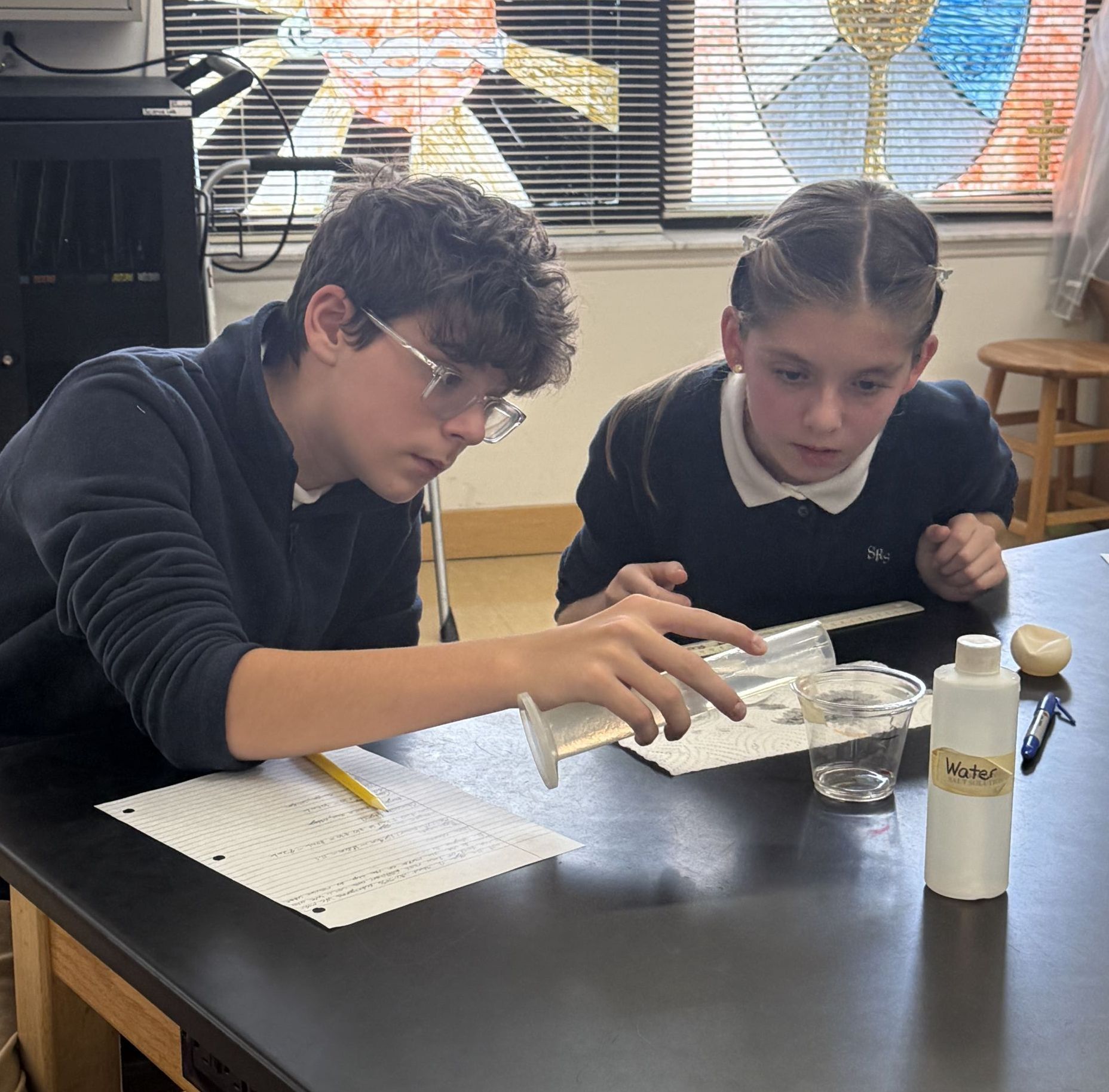
The St. Rose of Lima School science program provides hands-on experience where students explore, explain and predict phenomena in both natural and simulated environments and have an opportunity to present oral and written analysis. Students in grades 5 – 8 learn the scientific method by designing and conducting science experiments. The program also introduces students to environmental science and organism classification. Students in Grades 7 and 8 participate in our Science Horizons science fair. Ten finalists advance to the prestigious Connecticut Science and Engineering Fair.
The St. Rose of Lima School science laboratory houses many large and varied collections including rocks, minerals, fossils, bones, bird nests, snake and animal skins, antlers, bivalves, gastropods, ocean sponges, echinoderms, arthropods, sand from around the world, and many more preserved specimens.
Technology
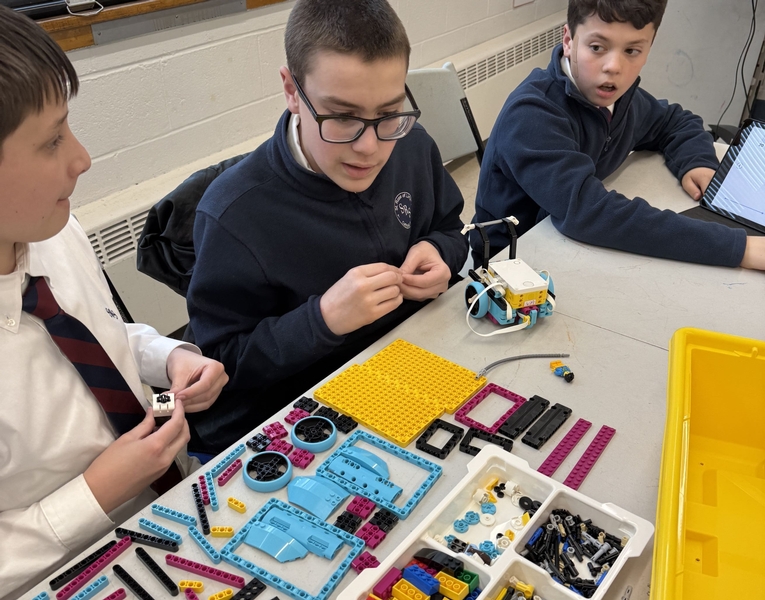
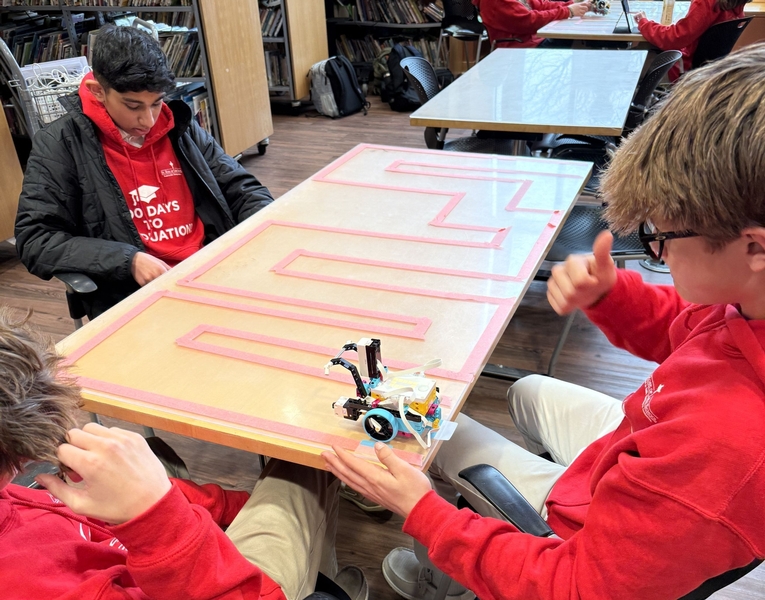
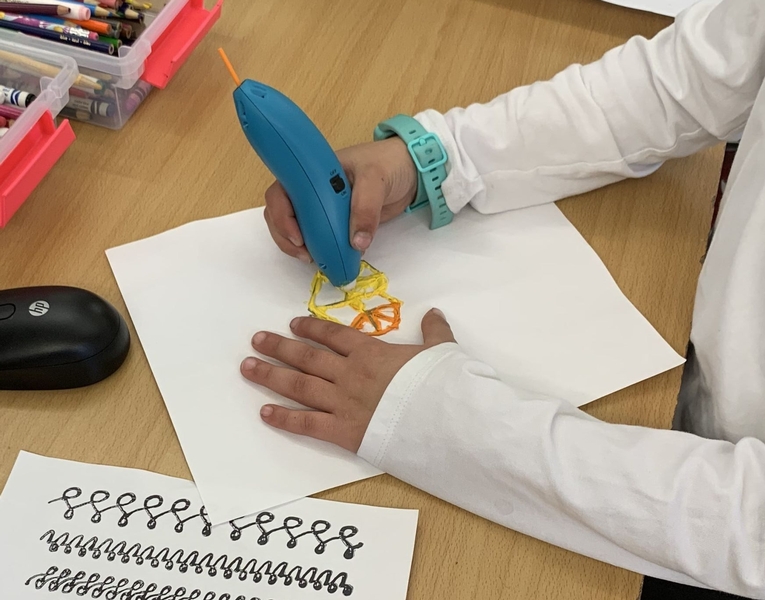
At St. Rose of Lima School, we recognize the vital role that technology plays in every aspect of a student’s life. Our students begin computer instruction at an early age so they can utilize the latest technology for problem-solving and critical thinking skills as they enter into the world of robotics, scientific exploration, art graphics and engineering by design.
Students are provided an opportunity to engage in well-defined cross-curricular projects using our state-of-the-art technology systems and tools. These include in-depth research and writing presentations, robotics design, video production, and graphic art products.
St. Rose of Lima School students become proficient in:
- Presenting, tabulating, and explaining data
- Researching topics using credible resources
- Accurately and efficiently typing research papers
- Knowledge of proper presentation formatting
- Importing and exporting data between applications
- Keyboarding skills
- Google Suite (Gmail, Drive, Docs, Slides, and Sheets)
Problem-solving, thinking critically and communicating using technology
We are proud of the leading-edge technology that our school offers to students, including:
- Desktop computers, laptops, and tablets used by teachers for classroom instruction
- Laptops in the library/resource lab
- Chromebook carts in every classroom from grade 2 to 8
- iPads in lower grade classrooms and in the Innovation Lab
- Smart boards or Smart TVs in every classroom
- State-of-the art wireless infrastructure
Engineering
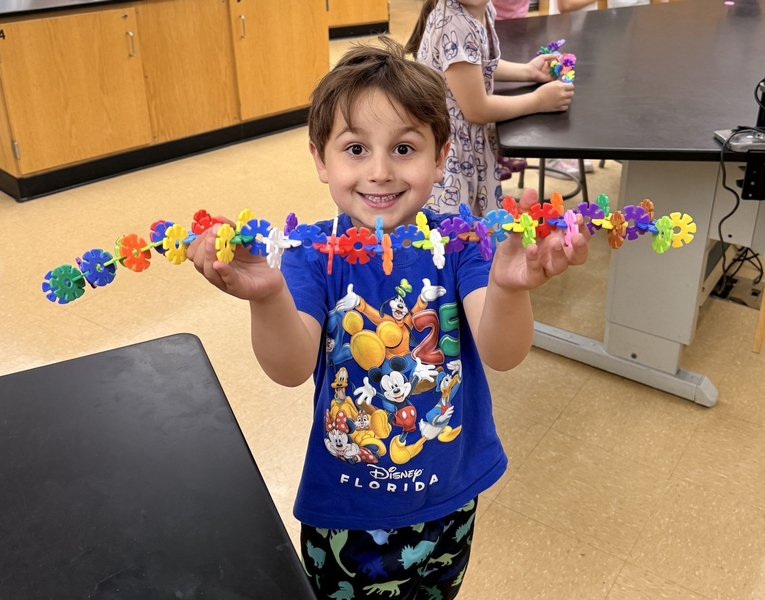
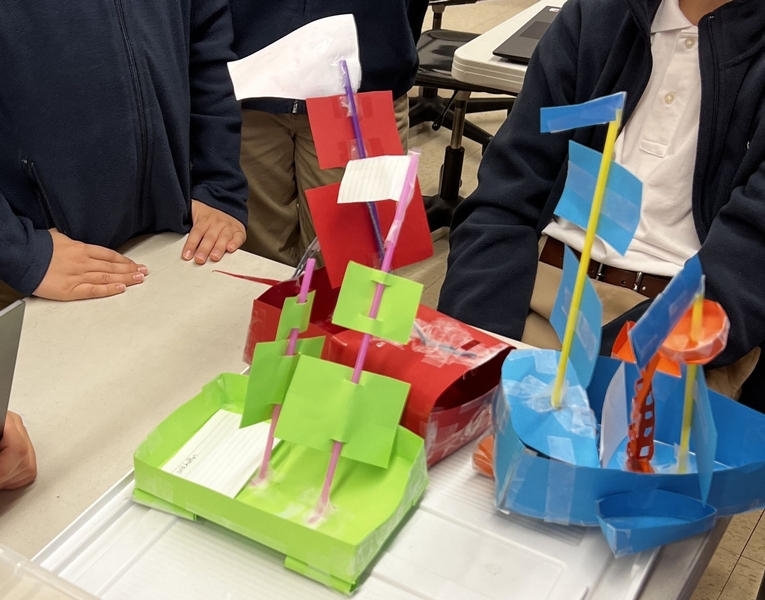
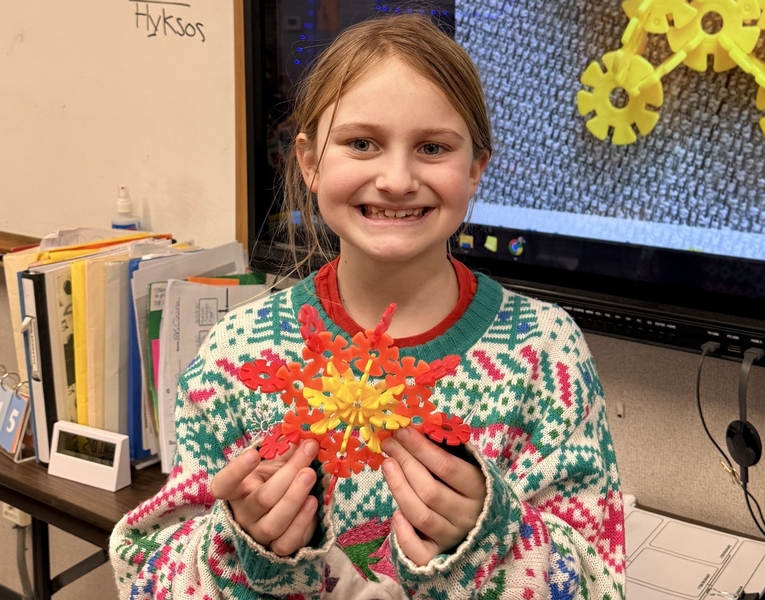
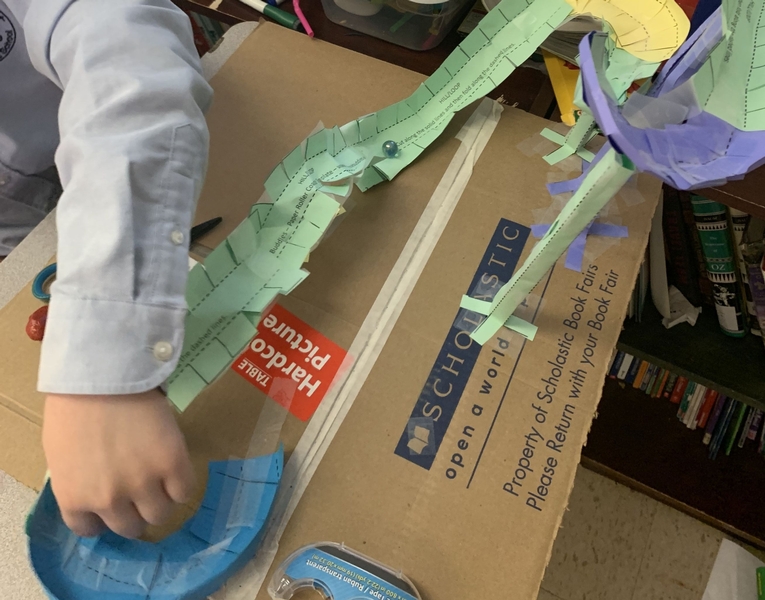
Students in Kindergarten through Grade 8 follow the same steps of the Engineering Design Process used by all engineers. Upper grade students write engineering design journals, modeled on journals written by professional engineers for design challenges.
We teach independent innovation and allow students to explore greater depths of subjects by utilizing integrated content skills, thinking critically and working as a member of a team.